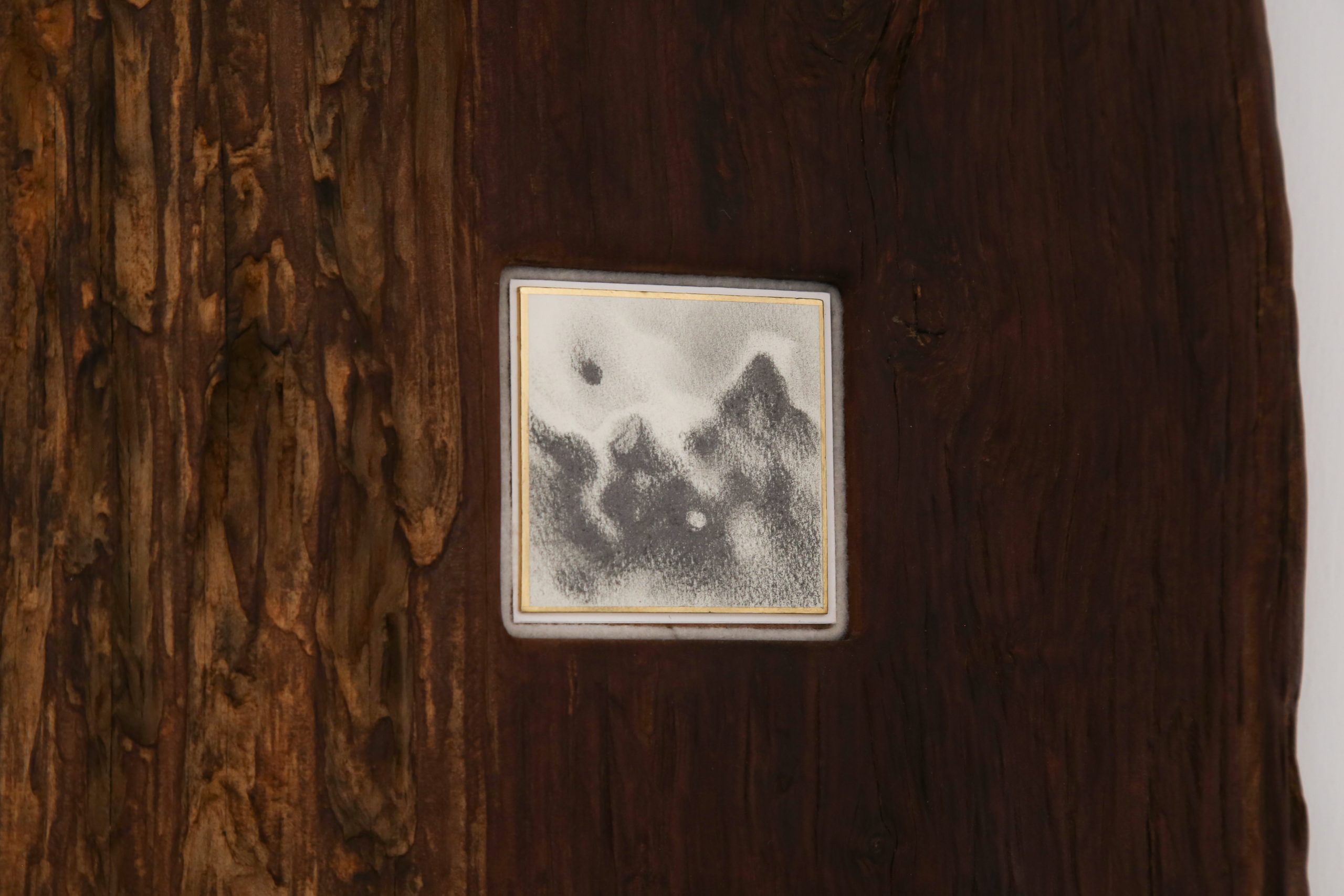
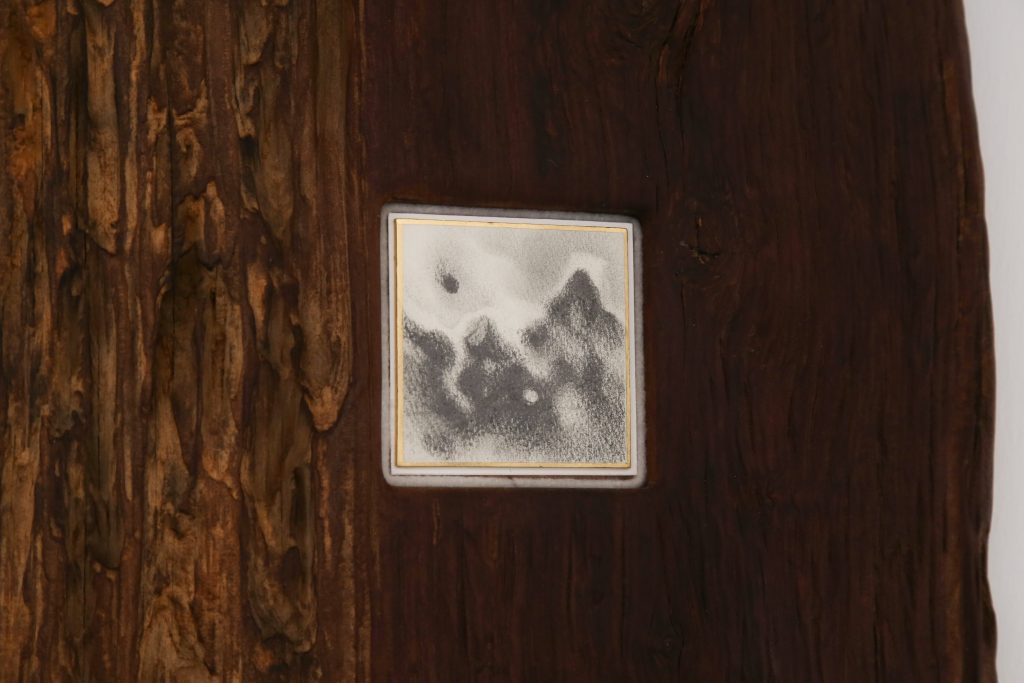
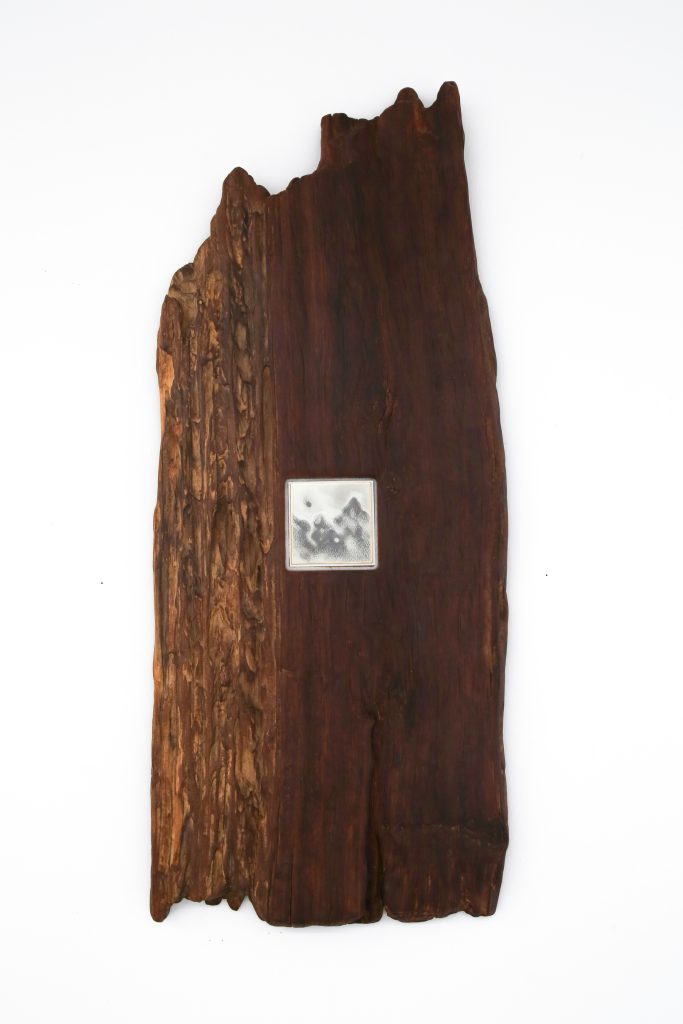
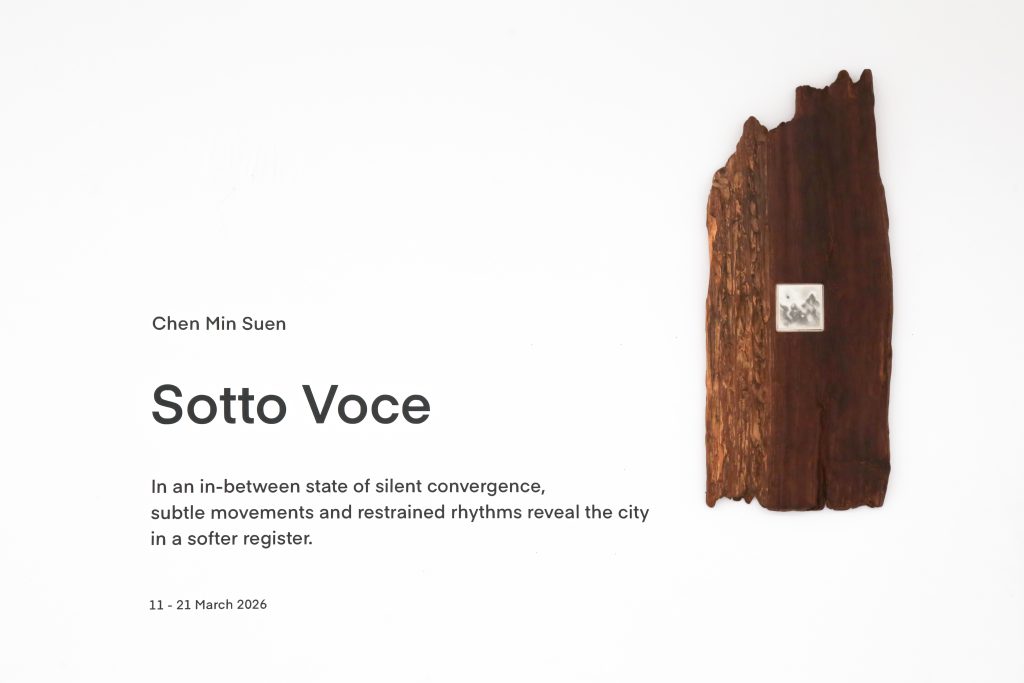
Charcoal on shikishi board, mounted on reclaimed camphor wood
335 x 790 x 17mm
2026
/
As a Southeast Asian Chinese, dialect identity has often remained at the level of spoken language. It is something present, yet not fully inhabited. In tracing the underlying pulse of this identity, I began searching for materials that carry lived memory. This led me to a farmer’s trolley sourced from Guangdong, a place connected to my ancestral roots. Parts of the wood are reworked into the piece, holding the physical traces of labour and time. As a Hakka person who has never been to Guangdong Meizhou, my understanding of the place is shaped through inherited memories from my grandparents. Within the idea of 禺 (yú), an in-between space, I carve out an identity that sits between the lived and the imagined. The use of the shikishi board is intentional. It introduces a Japanese aesthetic object into a work grounded in Chinese ancestry, reflecting the layered and often complex cultural conditions of Southeast Asia. Within the work, these tensions and affinities coexist. It becomes a site of silent convergence, as the collective identities and values we associate ourselves with continue to evolve over time.